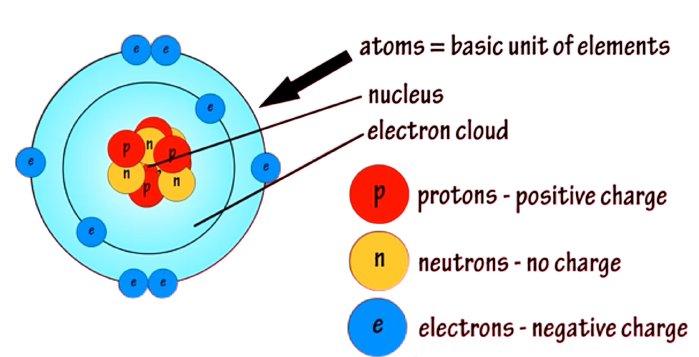
An atom is made up of three essential parts. Protons, neutrons and electrons. The Protons and neutrons are located in the nucleus, which is in the centre of the atom. The electrons are located in the shell around the nucleus. Protons have a positive electric charge, neutrons are uncharged, and electrons have a negative charge. The number of protons and electrons are equal, meaning that atoms have a neutral charge. The Electrons are on shells. Different shells can hold different amounts of Electrons. The first shell can only hold two electrons. The second and third shells can hold eight electrons. If a shell is not full, the atom is unstable.
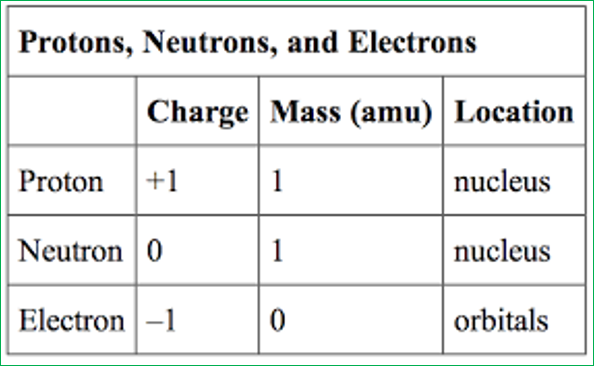
The number of protons in an atom is known as its atomic number or proton number. In all atoms, the number of protons is equal to the number of electrons.
The Total number of Protons + Neutrons = mass number
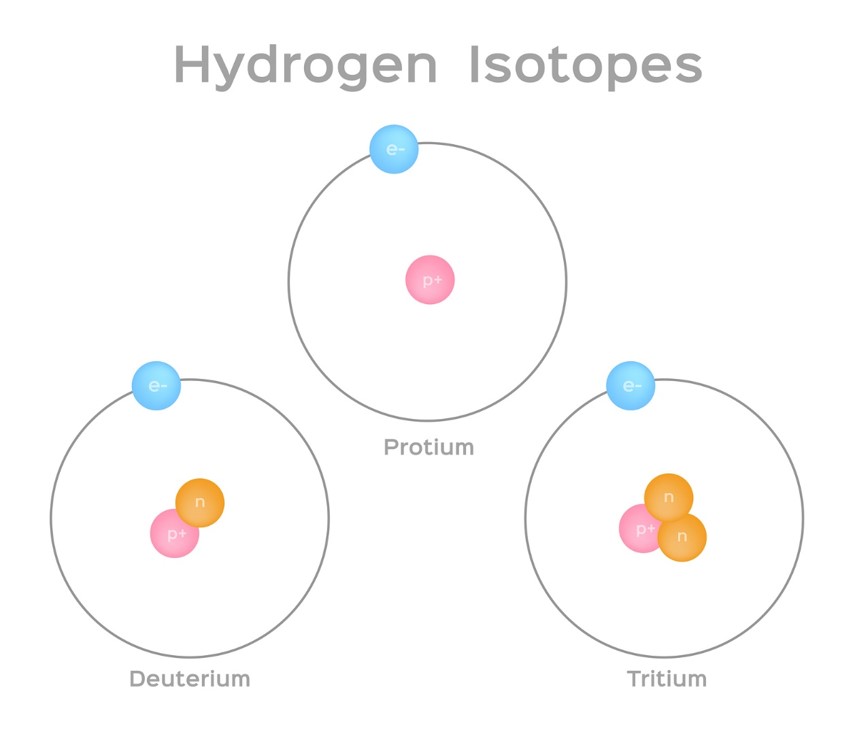
Isotopes are two or more forms of the same element that contain equal numbers of protons and electrons but different numbers of neutrons, and have different mass numbers. Isotopes have no overall charge due to the fact Neutrons have no charges.
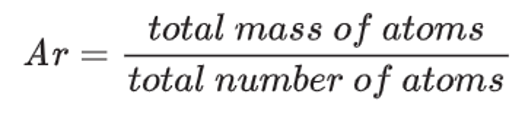
Relative atomic mass – the mean mass of an atom of an element compared with Carbon-12. It takes into account all the isotopes of the element and the amounts of each.
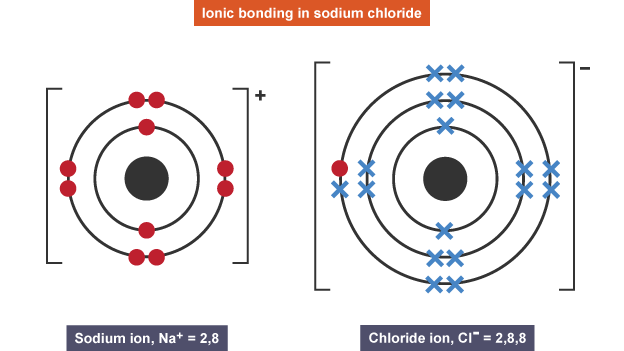
ionic bonding
– occurs between metal and non-metal atoms.
In Ionic Bonding the metal gives the non-metal some Electrons which forms ions. The Metal becomes the positive ion and the non-metal becomes the negative ion . There is a strong electrostatic force of attraction between these oppositely charged ions – this is called an ionic bond.
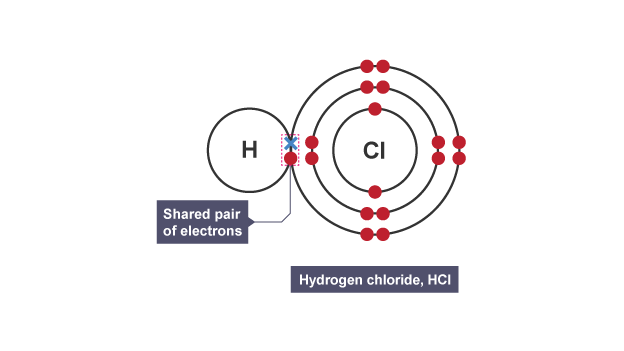
covalent bonding
– occurs between non-metals atoms only.
A covalent bond forms when two non-metal atoms share a pair of electrons. The electrons involved are in the outer shells of the atoms. An atom that shares one or more of its electrons will complete its outer shell.
metallic bonding
– occurs between metal atoms only.
Most metals are malleable – they can be bent and shaped without breaking. This is because they consist of layers of Positive ions that can slide over one another when the metal is bent, hammered or pressed. Metals form giant structures (Lattice) in which electrons in the outer shells of the metal atoms are free to move.
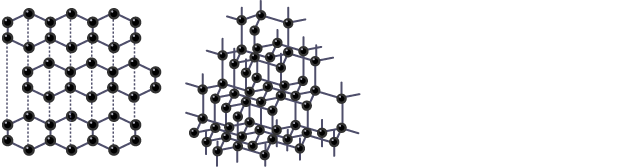
Graphite
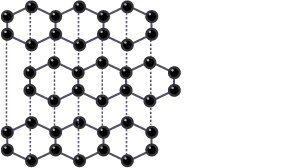
Graphite is a form of carbon in which the carbon atoms form covalent bonds with three other carbon atoms. This means that each carbon atom has a ‘spare’ electron which is delocalised between layers of carbon atoms. These layers can slide over each other, so graphite is much softer than diamond. Graphite conducts electricity due to the ‘spare’ electrons being delocalised between the layers. This conductivity makes graphite useful as electrodes for electrolysis.
Diamond
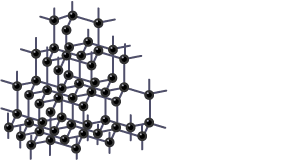
A diamond is one giant molecule of carbon atoms. Diamonds are colourless and transparent. Diamond is extremely hard and has a high melting point. For this reason, it is very useful in cutting tools. The cutting edges of discs used to cut bricks and concrete are tipped with diamonds. Diamond is insoluble in water. It does not conduct electricity. Every atom in a diamond is bonded to its neighbours by four strong covalent bonds, leaving no free electrons and no ions. This explains why diamond does not conduct electricity.